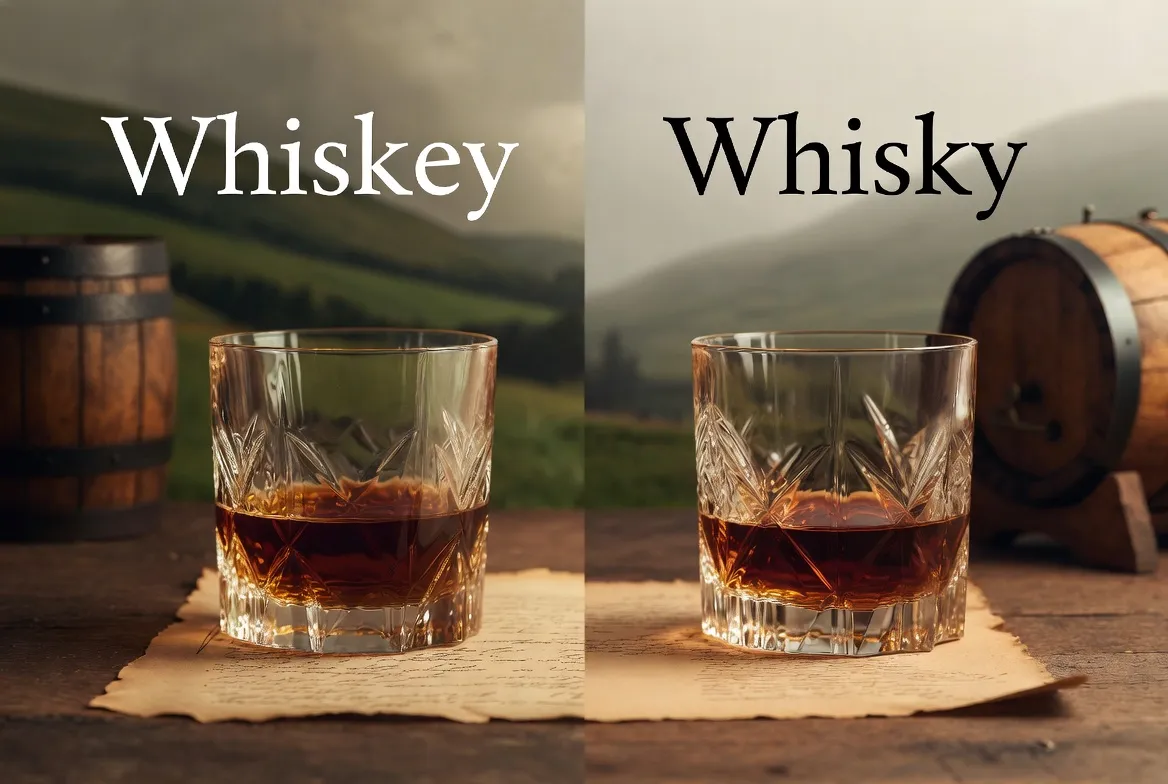
Whiskey or whisky both name the same beloved distilled spirit made from grain, but the spelling depends on its origin: “whiskey” (with an e) for drinks from Ireland and the United States, and “whisky” (no e) for those from Scotland, Canada, Japan, and most other places.
I still remember my first trip to a whiskey bar in Dublin years ago. I ordered a “Scotch whisky” and the bartender smiled. “You got the spelling right for Scotch,” he said, “but here in Ireland, we add the e.” That small moment sparked my deep dive into this topic. For over a decade as a spirits writer and language enthusiast, I’ve fielded the same question from friends, readers, and beginners: Is it whiskey or whisky?
People search this because labels look different, articles mix the terms, and no one wants to sound unsure when ordering a drink or writing about it. This guide clears up the confusion once and for all. You’ll learn the simple rules, the fascinating history, real-world examples, and exactly how to use the right spelling every time. Let’s pour a glass and sort this out.
Whiskey or Whisky – Quick Answer
Whiskey (with the e) and whisky (without) point to the same category of spirit: a distilled alcohol from fermented grain mash, aged in barrels. The difference is mostly about geography and tradition, not quality or type.
For example, sip a smooth Irish whiskey like Jameson, and you’ll see the e. Order a peaty Scotch whisky like Lagavulin, and it drops the e. Both taste amazing. Both are correct when used properly. The rule helps honor the drink’s roots and avoids mix-ups in conversation or writing.
The Origin and Background of Whiskey or Whisky
The story starts centuries ago in Ireland and Scotland. Monks brought distillation knowledge from the Mediterranean. They turned grain into a strong drink and called it something like “uisge beatha” in Gaelic: meaning “water of life.” English speakers shortened and twisted that into “whisky.”
Early spellings varied. By the 19th century, Irish producers added the e to stand out from Scottish rivals. They wanted to signal higher quality during tough market times. Scottish makers kept “whisky” and even wrote it into law for Scotch. Irish immigrants brought their spelling to America, so U.S. makers mostly use “whiskey.”
This isn’t just random. It reflects cultural pride and history. Today, the spelling tells you a lot about the spirit’s birthplace before you even open the bottle.
Whiskey or Whisky Explained – Key Differences and Variations
The core rule is simple:
- Whiskey (with e): Ireland and the United States.
- Whisky (no e): Scotland, Canada, Japan, and most others.
Pronunciation stays the same either way. You won’t hear the difference when someone speaks. But in writing and on labels, it matters.
Here’s a clear comparison:
| Term/Variant | Meaning | Region/Context | Best Used When |
| Whiskey | Grain spirit with e | Ireland, USA | Talking about Irish or American styles like bourbon, rye, or Jameson |
| Whisky | Grain spirit without e | Scotland, Canada, Japan, etc. | Referring to Scotch, Canadian, or Japanese whiskies |
| Scotch Whisky | Specific protected term | Scotland only | Must meet strict rules (no e, aged 3+ years, etc.) |
| Bourbon Whiskey | American corn-based | USA | At least 51% corn, new charred oak barrels |
Real examples: Jack Daniel’s is Tennessee whiskey. Johnnie Walker is Scotch whisky. Maker’s Mark chooses whisky to nod to Scottish heritage, even though it’s American.
Which Version Should You Use?
Match the spelling to the origin for accuracy and respect.
- For beginners or casual chats: Use “whiskey” in the U.S. or when speaking generally. It’s common and feels natural to most Americans.
- For Scotch fans or international writing: Stick with “whisky” when naming Scottish, Canadian, or Japanese products.
- Global or neutral use: “Whisky” works broadly in many style guides, but always follow the label for specific brands. In formal writing, be consistent within your piece.
If you’re unsure about a brand, check the bottle. That’s the gold standard.
Common Mistakes with Whiskey or Whisky
Even experts slip up. Here are the top errors and fixes:
- Mistake: Using “whiskey” for everything. Fix: Drop the e for Scotch. Why? It honors protected regional names and looks sloppy otherwise.
- Mistake: Spelling a brand wrong on social media or in reviews. Fix: Copy the exact label spelling. Brands care about this!
- Mistake: Thinking one spelling means better quality. Fix: Both are excellent. Focus on taste, not the letter.
- Mistake: Mixing spellings in one article. Fix: Pick one style and stay consistent, or switch only when naming specific origins.
- Mistake: Assuming American law demands “whiskey.” Fix: U.S. rules allow both, but tradition favors the e.
These mistakes happen because people treat it like a strict English rule instead of a cultural one.
Whiskey or Whisky in Real-World Examples
See it in action:
Professional email: “I’m bringing a bottle of Irish whiskey to the tasting tonight. Have you tried any new Japanese whisky lately?”
News headline: “Scotch Whisky Exports Hit Record High as Demand for Single Malts Grows.”
Social media post: “Nothing beats a neat pour of Kentucky whiskey on a cold evening. What’s your go-to dram? 🥃 #WhiskeyWednesday”
Formal report: “The global whisky market continues to expand, with American whiskey and Scotch whisky leading growth in key regions.”
Notice how the spelling shifts naturally with the origin.
Whiskey or Whisky : Data, Trends & Usage
People search “whiskey or whisky” most in English-speaking countries, especially the U.S., UK, Ireland, and emerging markets like India and Japan. It’s an informational query: folks want clarity while exploring the category.
The global whisky market is booming, valued around $93 billion recently and projected to grow strongly. American whiskey (bourbon especially) and Scotch drive much of this. Trends show younger drinkers discovering craft options and international styles, making correct terminology more relevant than ever.
This matters now because the spirits world feels more connected. Knowing the spelling shows respect and helps you join conversations confidently.
FAQ
Q: What does whiskey or whisky mean?
A: Both words describe a distilled spirit from grain, aged in wood. The spelling signals the drink’s country of origin.
Q: How do you use whiskey or whisky correctly?
A: Use “whiskey” for Irish and American spirits. Use “whisky” for Scottish, Canadian, Japanese, and others. Always check the label.
Q: Whiskey vs whisky : what’s the difference?
A: Mainly spelling tied to geography. No major taste difference from the letter itself. It reflects history and tradition.
Q: Is whiskey or whisky acceptable in formal writing?
A: Yes. Be consistent and match the spirit’s origin. Style guides support both when used properly.
Q: Which version is correct : whiskey or whisky?
A: Both are correct. Neither is universally wrong. It depends on context.
Q: Where does whiskey or whisky come from?
A: From Gaelic “uisge beatha” (water of life). Spelling diverged in the 19th century between Irish and Scottish producers.
Q: Can whiskey or whisky be used in cocktails or general talk?
A: Absolutely. In casual settings, “whiskey” works fine broadly. For precision, follow regional rules.
Conclusion
You’ve now got the full picture on whiskey or whisky. The key takeaways: Spelling honors origins, both versions are right when matched correctly, history explains the split, and simple rules make it easy to remember.
My final recommendation? Relax and enjoy the drink. Use “whiskey” in America or for Irish styles. Drop the e for Scotch and friends. Most importantly, explore with curiosity: try one of each and taste the differences for yourself.
Further or Farther: Easy Way to Never Mix Them Up

Ifrah Maqsood is an English author passionate about creating articles that inspire and engage users.
Their work explores imagination, emotion, and the human experience across diverse themes.
Through their writing, they aim to leave a lasting impact on audiences around the world.