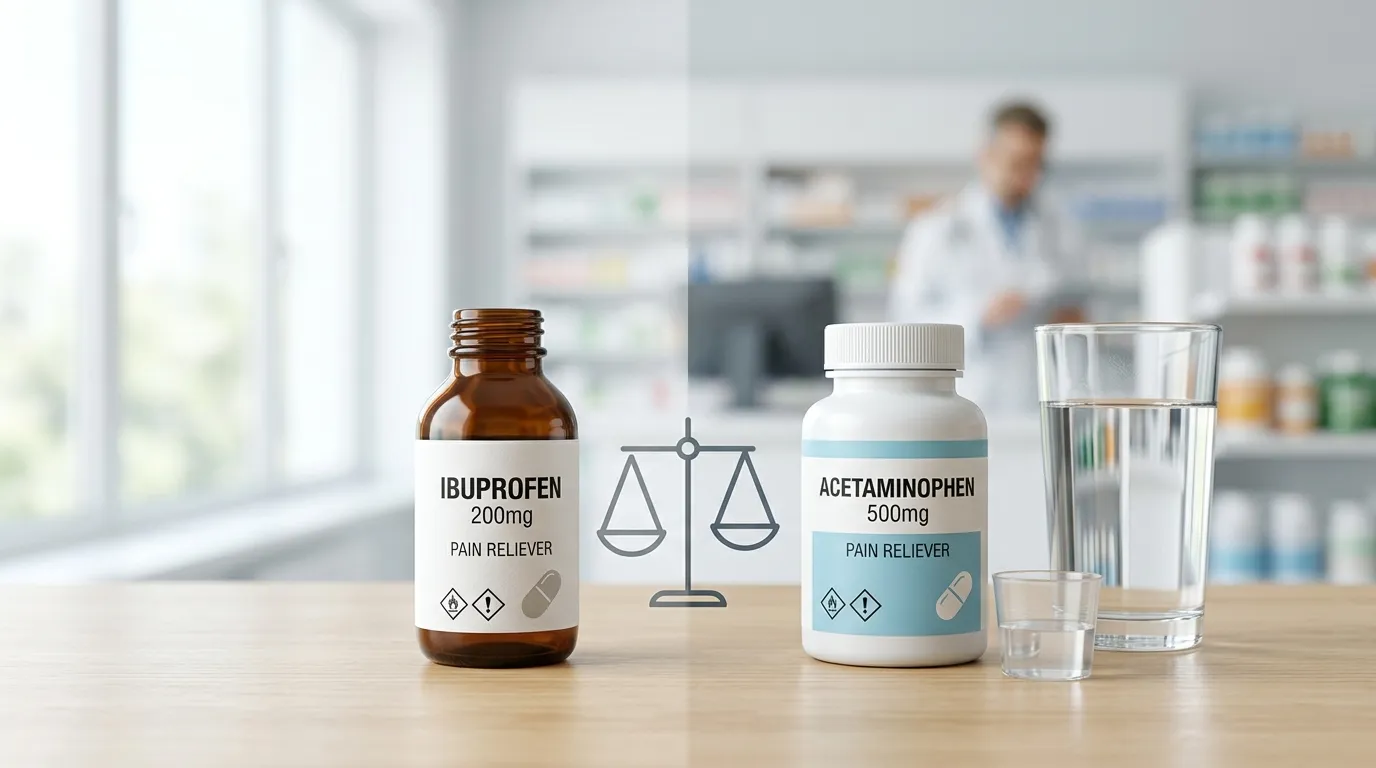
Ibuprofen and Tylenol are different medicines. Ibuprofen is an NSAID, while Tylenol contains acetaminophen and mainly helps relieve pain and reduce fever.
In short: Choose based on your symptoms, health needs, and the medicine label: not simply because one is “better” than the other.
When you have a headache, fever, muscle ache, or other minor pain, you may ask: ibuprofen or Tylenol: which should I take? These two medicines are common, but they are not the same. Ibuprofen is a nonsteroidal anti-inflammatory drug (NSAID), while Tylenol is a brand name for acetaminophen. Both can help with pain and fever, but they work differently and have different safety considerations. (U.S. Food and Drug Administration)
This comparison can be confusing because people often use the brand name “Tylenol” when they really mean its active ingredient, acetaminophen. In other countries, acetaminophen is commonly called paracetamol. (U.S. Food and Drug Administration)
The right choice can depend on the type of pain, your health, other medicines you take, and the product label. This guide explains the difference in simple language so you can understand these two common pain relievers better.
Important: This article gives general information, not personal medical advice. Always follow the medicine label and ask a doctor or pharmacist if you are unsure which medicine is suitable for you.
Ibuprofen or Tylenol – Quick Answer
Ibuprofen and Tylenol (acetaminophen) are different medicines used to relieve pain and reduce fever.
- Ibuprofen is an NSAID. It can relieve pain, reduce fever, and help reduce inflammation or swelling. (nhs.uk)
- Tylenol is a brand name for acetaminophen, which is used to relieve pain and reduce fever. (U.S. Food and Drug Administration)
For example:
- For a simple headache, either may be used when appropriate.
- For pain that includes inflammation or swelling, ibuprofen may be useful.
- For fever, acetaminophen or ibuprofen may help reduce the temperature when used as directed. (U.S. Food and Drug Administration)
Neither medicine is automatically “better” for everyone. Your health and the type of pain matter.
The Origin of Ibuprofen or Tylenol
Ibuprofen is the generic name of a medicine in the NSAID family. It is used to treat pain, inflammation, and fever. (nhs.uk)
Tylenol, on the other hand, is a brand name, not the generic name of the medicine. Its active ingredient is acetaminophen. In many countries outside the United States, acetaminophen is called paracetamol. (U.S. Food and Drug Administration)
This is why the phrase “ibuprofen or Tylenol” can be slightly misleading. You are comparing an active ingredient with a brand name.
A more precise comparison is:
Ibuprofen vs. acetaminophen
The different names come from the history of medicine, branding, and regional naming practices. “Acetaminophen” is the common name in the United States, while “paracetamol” is widely used elsewhere. (U.S. Food and Drug Administration)
British English vs American English Spelling
This is not mainly a British-versus-American spelling issue.
The bigger difference is the name used for acetaminophen. In the United States, it is commonly called acetaminophen. In the UK and many other countries, the medicine is commonly called paracetamol. (U.S. Food and Drug Administration)
| Version | Spelling | Region | Example Sentence |
|---|---|---|---|
| Generic medicine | Ibuprofen | US, UK, and many countries | Ibuprofen can reduce pain and inflammation. |
| US generic name | Acetaminophen | Mainly US usage | Acetaminophen can reduce pain and fever. |
| UK/Commonwealth generic name | Paracetamol | UK and many other countries | Paracetamol is commonly used for pain and fever. |
| US brand | Tylenol | Mainly US market | Tylenol contains acetaminophen. |
So, if you are writing for an international audience, it can help to mention acetaminophen (paracetamol) when discussing Tylenol.
Which Spelling Should You Use?
US audience
For American readers, ibuprofen and Tylenol are familiar terms. If you want to be medically precise, explain that Tylenol is a brand containing acetaminophen.
UK/Commonwealth audience
For UK readers, ibuprofen and paracetamol are generally more familiar medicine names. The term Tylenol may be less useful because it is primarily associated with the US market. The NHS lists ibuprofen and paracetamol as common painkillers. (nhs.uk)
Global/SEO audience
For global content, use the phrase ibuprofen or Tylenol if it matches the search query, but explain the generic names clearly:
Ibuprofen vs. Tylenol (acetaminophen/paracetamol)
This makes the article easier for readers from different countries to understand.
Common Mistakes with Ibuprofen or Tylenol
One common mistake is treating the two medicines as if they contain the same active ingredient.
| Incorrect | Correct |
|---|---|
| Tylenol is another name for ibuprofen. | Tylenol is a brand containing acetaminophen. |
| Ibuprofen and acetaminophen are the same medicine. | They are different medicines. |
| All pain medicines contain acetaminophen. | Check the active ingredients on the label. |
| Taking several cold medicines is always safe with Tylenol. | Check whether other products also contain acetaminophen. |
Another important mistake is taking more medicine than directed. The FDA warns that too much acetaminophen can cause serious liver damage. (U.S. Food and Drug Administration)
Ibuprofen also has important warnings. It can cause stomach problems and may not be suitable for some people, including those with certain kidney, stomach, heart, or pregnancy-related concerns. (nhs.uk)
Always read the label before taking an over-the-counter medicine.
Ibuprofen or Tylenol in Everyday Examples
Emails
I have a headache today, so I may take an appropriate over-the-counter pain reliever.
News headlines
Ibuprofen and Acetaminophen Remain Common Pain Relievers
Social media
Is ibuprofen or Tylenol better for a headache?
Formal writing
Ibuprofen and acetaminophen are different classes of pain-relieving medicines with different properties and safety considerations.
In everyday US conversation, people often say “Tylenol” because it is a well-known brand. In medical or educational writing, acetaminophen is more precise when referring to the active ingredient.
Ibuprofen or Tylenol – Google Trends & Usage
Search interest in these medicines can change based on health concerns, seasonal illnesses, news coverage, and consumer questions.
In the United States, Tylenol is a familiar brand name, so people may search for it when looking for information about pain or fever. Ibuprofen is the generic medicine name and is also widely searched.
Outside the United States, people may be more likely to search for paracetamol instead of Tylenol. This reflects regional naming rather than a completely different medicine. (U.S. Food and Drug Administration)
Search interest can also vary by the type of question. Some people search for pain relief, while others want to compare medicines for fever, inflammation, headaches, or other common symptoms.
For SEO content, it is useful to explain both the brand and generic names without making unsupported claims about which medicine is best for every person.
Ibuprofen vs. Tylenol: Side-by-Side Comparison
| Feature | Ibuprofen | Tylenol |
|---|---|---|
| Active ingredient | Ibuprofen | Acetaminophen |
| Type | NSAID | Non-NSAID pain reliever/fever reducer |
| Helps with pain | Yes | Yes |
| Helps reduce fever | Yes | Yes |
| Helps reduce inflammation | Yes | No significant anti-inflammatory effect |
| Common US name | Ibuprofen | Tylenol |
| Common UK term | Ibuprofen | Paracetamol |
| Main safety concern | Can cause stomach, kidney, and other NSAID-related problems | Too much can cause serious liver damage |
| Brand or generic? | Generic medicine name | Tylenol is a brand name |
Ibuprofen can help reduce inflammation because it is an NSAID. Acetaminophen is used mainly for pain and fever and does not work as an anti-inflammatory drug in the same way. (nhs.uk)
The safest choice depends on the person and situation. If you have a medical condition, take other medicines, are pregnant, or are unsure what is appropriate, ask a healthcare professional.
FAQs About Ibuprofen or Tylenol
Is ibuprofen the same as Tylenol?
No. Ibuprofen and Tylenol are different. Tylenol contains acetaminophen, while ibuprofen is an NSAID. (U.S. Food and Drug Administration)
Is Tylenol ibuprofen?
No. Tylenol is not ibuprofen. Tylenol is a brand name associated with acetaminophen.
Which is better for inflammation, ibuprofen or Tylenol?
Ibuprofen can help reduce inflammation because it is an NSAID. Acetaminophen is mainly used for pain and fever. (nhs.uk)
Is acetaminophen the same as Tylenol?
Tylenol is a brand name, while acetaminophen is the active ingredient in Tylenol products. (U.S. Food and Drug Administration)
Is paracetamol the same as Tylenol?
Paracetamol and acetaminophen refer to the same active medicine. Tylenol is a brand name for products containing acetaminophen in the US. (U.S. Food and Drug Administration)
Can ibuprofen and acetaminophen be taken together?
Some adults may be able to take them together, but this is not right for everyone. The NHS advises trying them separately first when possible and using the lowest effective dose. Ask a doctor or pharmacist if you are unsure. (nhs.uk)
Which is safer, ibuprofen or Tylenol?
There is no single answer for everyone. Both medicines have risks if used incorrectly. Follow the product label and ask a healthcare professional if you have health conditions or take other medicines. (U.S. Food and Drug Administration)
Conclusion
When comparing ibuprofen or Tylenol, remember that these are not the same medicine. Ibuprofen is an NSAID that can relieve pain, reduce fever, and reduce inflammation. Tylenol is a brand name for products containing acetaminophen, which is mainly used to relieve pain and reduce fever. (nhs.uk)
The names can also be confusing because acetaminophen is commonly called paracetamol in the UK and many other countries. (U.S. Food and Drug Administration)
For general writing, be clear about the difference between a brand name and an active ingredient. If you are writing for US readers, “Tylenol” is familiar. For an international audience, “acetaminophen” and “paracetamol” can make the information clearer.
Most importantly, do not choose a medicine based only on a simple “better” comparison. Your symptoms, age, health conditions, other medicines, and the product instructions all matter. Always read the label and ask a pharmacist or doctor when you are unsure. Taking too much of either medicine can cause serious harm. (U.S. Food and Drug Administration)
Alumni or Alumnus: Which Word Is Correct?

Smama Aroosh is an English author and scholar with a strong interest in literature, language, and contemporary writing. Their work reflects a commitment to academic excellence and thoughtful exploration of literary themes, contributing meaningfully to the field of English studies.