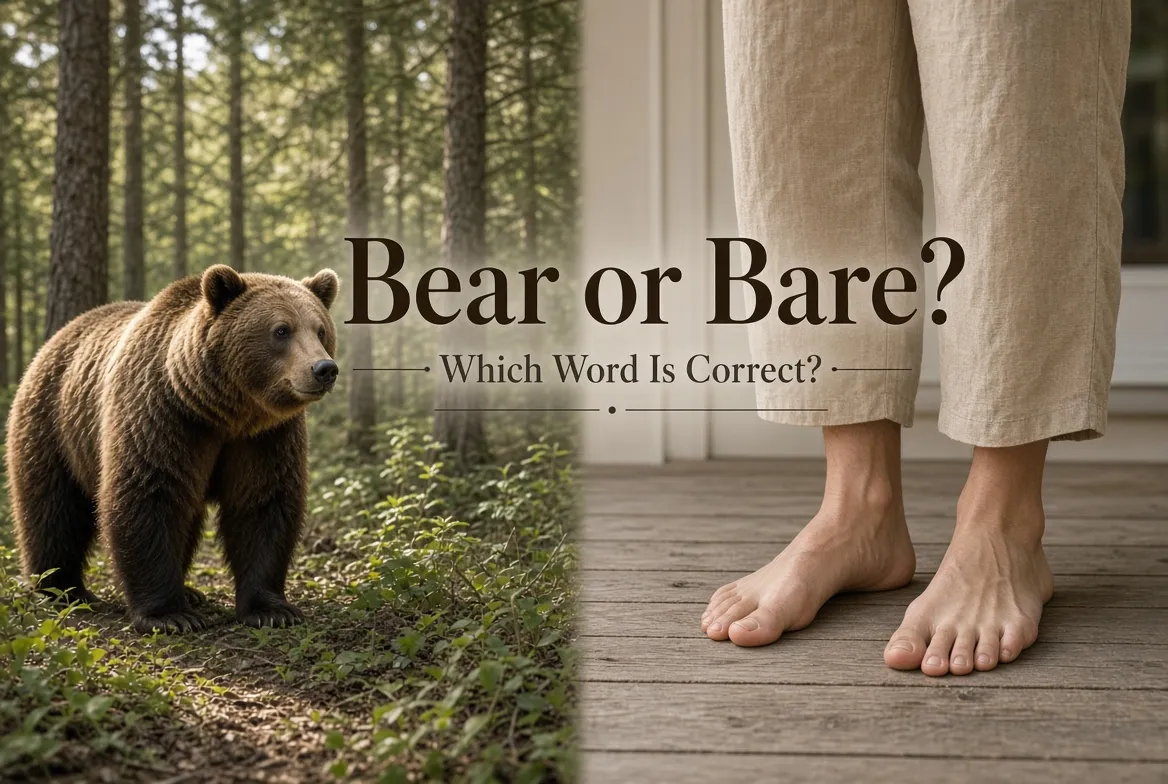
Bear means an animal or to carry/endure something, while bare means uncovered, exposed, or empty.
Example: I saw a bear. / She walked with bare feet.
Have you ever wondered whether to write bear or bare? These two words sound the same, but they have very different meanings. This can make them confusing, especially for English learners, students, and anyone who wants to write clearly.
The good news is that both bear and bare are correct words. The key is knowing when to use each one.
Bear can mean an animal, or it can mean to carry, tolerate, or endure something. For example, you might see a bear in the forest, bear a heavy load, or say, “I cannot bear the noise.”
Bare usually means uncovered, empty, or simple. You can have bare feet, bare walls, or a bare room.
Because both words sound alike in many forms of English, spelling them correctly depends on their meaning. In this guide, we will explain the difference between bear and bare, their origins, common mistakes, and easy examples. By the end, you will know exactly which word to choose.
Bear or Bare – Quick Answer
Bear and bare are both correct words, but they have different meanings.
- Bear can mean a large animal: We saw a bear in the forest.
- Bear can also mean to tolerate or endure: I cannot bear the pain.
- Bare means uncovered or exposed: He walked with bare feet.
A simple way to remember them:
Bear = animal, carry, or tolerate.
Bare = uncovered or empty.
Examples
- The bear walked through the woods.
- She could not bear the loud noise.
- He stood with bare feet on the sand.
The Origin of Bear or Bare
The words bear and bare come from different Old English roots, even though they can sound the same.
Bear, when used as a verb meaning “to carry” or “to endure,” comes from Old English beran, meaning “to carry” or “to bring.” The noun bear, meaning the animal, has a different Germanic origin.
Bare comes from Old English bær, meaning “naked,” “uncovered,” or “without covering.”
Over time, English spelling and pronunciation changed. In modern English, the words are often pronounced alike. This makes them homophones.
Their meanings, however, remain different. Context is therefore very important when choosing between them.
British English vs American English Spelling
There is no major British-American spelling difference between these words. Both bear and bare are spelled the same in British and American English.
| Version | Spelling | Region | Example Sentence |
|---|---|---|---|
| Animal | bear | British & American English | We saw a bear near the forest. |
| Carry/endure | bear | British & American English | I cannot bear the noise. |
| Uncovered | bare | British & American English | She walked with bare feet. |
The difference is based on meaning, not region.
Whether you are writing for readers in the United States, United Kingdom, Canada, Australia, or another English-speaking country, the spellings remain the same.
Which Spelling Should You Use?
US audience
Use bear when you mean the animal, carrying something, or tolerating something. Use bare when you mean uncovered or exposed.
UK/Commonwealth audience
The same rule applies. British English uses bear and bare in the same ways as American English.
Global/SEO audience
For global content, always choose the word based on its meaning. Search engines understand the difference, but using the wrong word can confuse your readers.
A useful memory trick is:
Bare = without covering.
Think of bare feet or bare walls.
Bear = animal or endure.
Think of a bear in the woods or bear the pain.
Common Mistakes with Bear or Bare
Because these words sound alike, they are often confused in writing.
| Incorrect | Correct |
|---|---|
| I can’t bare the pain. | I can’t bear the pain. |
| She walked with bear feet. | She walked with bare feet. |
| He could not bare the pressure. | He could not bear the pressure. |
| The room had bear walls. | The room had bare walls. |
Common mistake 1: “Bear the pain”
Use bear when you mean tolerate or endure.
- ❌ I cannot bare this pain.
- ✅ I cannot bear this pain.
Common mistake 2: “Bare feet”
Use bare when feet have no shoes or socks.
- ❌ She walked on bear feet.
- ✅ She walked on bare feet.
Common mistake 3: “Bear necessities”
The phrase bare necessities means the most basic things needed.
- ❌ We packed only the bear necessities.
- ✅ We packed only the bare necessities.
Bear or Bare in Everyday Examples
These words appear often in everyday English.
Emails
Please bear with me while I check the information.
Here, bear with me means “please be patient.”
News Headlines
Bear Spotted Near Mountain Road
Here, bear refers to the animal.
Social Media
I love walking barefoot on the beach!
Here, the related word barefoot means without shoes.
Formal Writing
The study examines how people bear stress during difficult situations.
Here, bear means tolerate or endure.
Another example:
The building has bare walls and very little decoration.
Here, bare means uncovered or plain.
Bear or Bare – Google Trends & Usage
Both bear and bare are common English words, but their popularity depends heavily on context.
The word bear appears frequently in searches about wildlife, nature, animals, and outdoor activities. It is also common in phrases such as bear with me, bear the cost, and bear the pain.
The word bare appears often in searches related to clothing, appearance, simplicity, and phrases such as bare feet, bare minimum, and bare necessities.
Search interest can also change with news events, seasonal topics, and popular phrases. Since the words have different meanings, search engines usually identify their intended meaning from the surrounding words.
For SEO and everyday writing, focus on meaning and context, not regional spelling.
Bear vs Bare: Side-by-Side Comparison
| Feature | Bear | Bare |
|---|---|---|
| Main meaning | Animal; carry; endure | Uncovered; exposed; simple |
| Part of speech | Noun and verb | Adjective and verb |
| Pronunciation | Usually /ber/ | Usually /ber/ |
| Example | A bear lives in the forest. | He has bare feet. |
| Common phrase | Bear with me | Bare minimum |
| British spelling | Bear | Bare |
| American spelling | Bear | Bare |
| Main difference | Meaning | Meaning |
The easiest rule is:
Bear = animal, carry, or endure.
Bare = uncovered, exposed, or plain.
FAQs About Bear or Bare
Is bear or bare correct?
Both are correct. Bear and bare are different words with different meanings.
What is the difference between bear and bare?
Bear can refer to an animal or mean to carry or tolerate something. Bare means uncovered, exposed, or plain.
Is it “bear with me” or “bare with me”?
The correct phrase is “bear with me.” It means “please be patient with me.”
Is it bare feet or bear feet?
The correct phrase is “bare feet” when you mean feet without shoes or socks.
Is it bear the pain or bare the pain?
The correct phrase is “bear the pain.” Here, bear means to tolerate or endure.
Are bear and bare homophones?
Yes. In most common English pronunciation, bear and bare sound the same but have different meanings and spellings.
How can I remember bear vs bare?
Remember bare = uncovered. For example, bare feet. Use bear for the animal or when you mean carry or tolerate something.
Conclusion
Understanding bear or bare is easier once you focus on meaning instead of pronunciation. Both words are correct, but they cannot normally be used interchangeably.
Use bear when you mean the animal, or when you mean to carry, support, tolerate, or endure something. For example, you can see a bear, bear a heavy load, or bear the pain.
Use bare when something is uncovered, exposed, empty, or simple. You can have bare feet, bare walls, or the bare minimum.
There is no important British-versus-American spelling difference here. The same spellings and basic meanings are used in both varieties of English.
If you are unsure, ask yourself what you mean. Is it an animal, or are you talking about carrying or enduring something? Choose bear. Is something uncovered or without its usual covering? Choose bare.
Once you connect bare with “uncovered” and bear with the animal or “endure,” this common English confusion becomes much easier to avoid.
Forth or Fourth: Difference and Use?

Smama Aroosh is an English author and scholar with a strong interest in literature, language, and contemporary writing. Their work reflects a commitment to academic excellence and thoughtful exploration of literary themes, contributing meaningfully to the field of English studies.