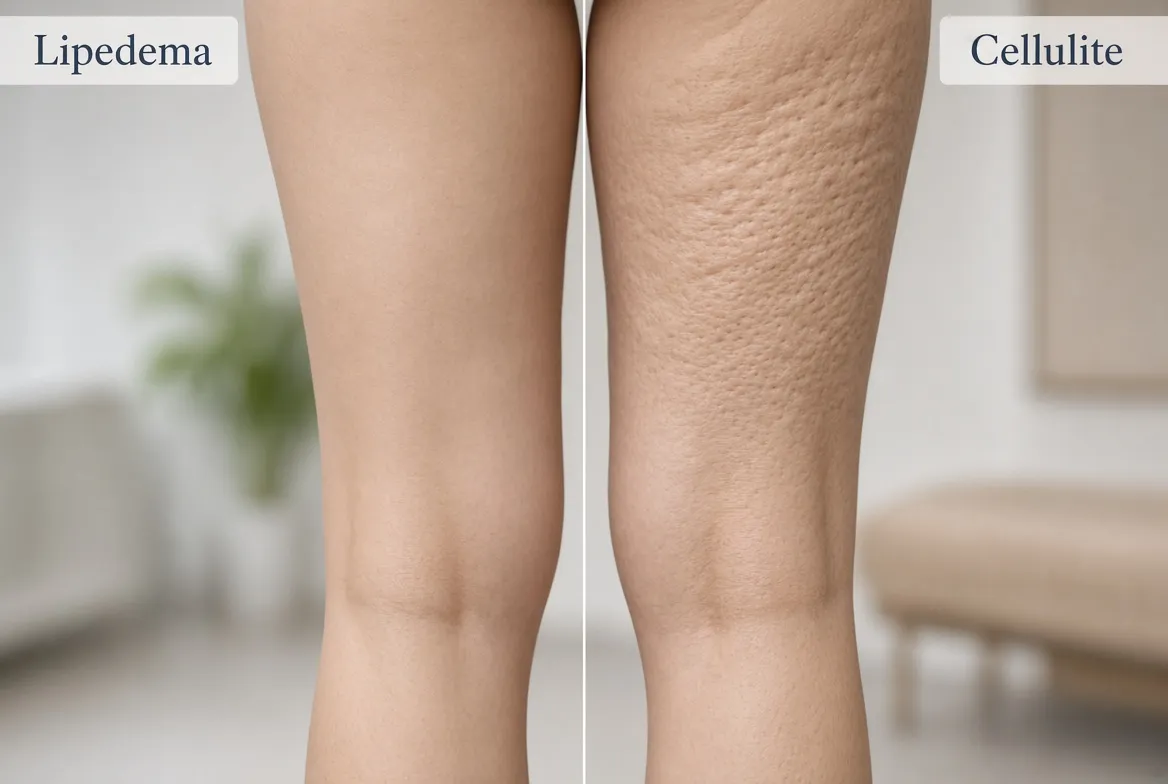
Lipedema and cellulite are not the same. Lipedema is a medical condition involving abnormal fat buildup, while cellulite is a common dimpled skin appearance.
When people notice uneven, dimpled, or unusual-looking skin on their thighs, hips, or legs, they may search for lipedema or cellulite to understand what they are seeing. These two terms are sometimes confused because both can affect the appearance of the skin and body shape.
However, lipedema and cellulite are not the same thing. Cellulite is a common cosmetic skin change caused by fat pushing against connective tissue. Lipedema is a long-term medical condition involving abnormal fat buildup, usually in both legs and sometimes the arms. (Cleveland Clinic)
The difference matters because their symptoms can be very different. Cellulite usually causes dimpling but is not painful. Lipedema may cause pain, tenderness, swelling, heaviness, and easy bruising. (Cleveland Clinic)
This guide explains the difference in simple language. It also covers spelling, British and American usage, common mistakes, everyday examples, and when it may be useful to speak with a healthcare professional.
Lipedema or Cellulite – Quick Answer
Lipedema and cellulite are different conditions.
- Lipedema is a medical condition involving abnormal fat buildup, often affecting both sides of the lower body. It may cause pain, tenderness, swelling, heaviness, and easy bruising. (nhs.uk)
- Cellulite is a common cosmetic condition that creates dimpled or puckered skin, often on the thighs, buttocks, and stomach. (Cleveland Clinic)
Simple examples:
- Dimpled skin on the thighs without pain may be cellulite.
- Both legs may become disproportionately larger, with tenderness and easy bruising, which can occur with lipedema.
- A person can have both lipedema and cellulite.
Appearance alone cannot confirm a diagnosis. A healthcare professional can assess symptoms and medical history.
The Origin of Lipedema or Cellulite
Lipedema and cellulite are medical terms, not two spellings of the same word.
The word lipedema combines roots relating to fat and swelling. In British English, the condition is commonly written lipoedema, while lipedema is widely used in American English. The spelling difference comes from the different use of “o” in British medical terminology.
Cellulite comes from the French word cellulite and has been used in English to describe the dimpled appearance of skin caused by changes involving fat and connective tissue.
The important point is that these terms describe different things. Lipedema is a medical condition, while cellulite is generally described as a cosmetic condition. (Cleveland Clinic)
British English vs American English Spelling
There is a genuine regional spelling difference for lipedema/lipoedema, but not between lipedema and cellulite.
| Version | Spelling | Region | Example Sentence |
|---|---|---|---|
| American English | lipedema | US and commonly international | Lipedema can affect both legs. |
| British English | lipoedema | UK and often Commonwealth | Lipoedema may cause pain and bruising. |
| Both varieties | cellulite | US, UK, and international | Cellulite can cause dimpled skin. |
The medical condition is the same despite the spelling difference between lipedema and lipoedema. The word cellulite does not normally change spelling between British and American English.
Which Spelling Should You Use?
US audience
Use lipedema when writing for American readers. This is the standard spelling commonly used in US medical information.
Use cellulite for the cosmetic condition.
UK/Commonwealth audience
Use lipoedema when following British English spelling. NHS information uses lipoedema. (nhs.uk)
Global/SEO audience
For a broad online audience, lipedema is a useful primary spelling, but it is also helpful to mention lipoedema as the British spelling.
If your article targets UK readers, use lipoedema consistently. For international content, you can introduce both forms once and then choose one spelling for consistency.
Common Mistakes with Lipedema or Cellulite
Here are some common mistakes:
| Incorrect or misleading | Better wording |
|---|---|
| Lipedema is just cellulite. | Lipedema and cellulite are different. |
| Lipoedema and lipedema are different diseases. | Lipoedema and lipedema are spelling variants for the same condition. |
| Cellulite always means a medical disease. | Cellulite is generally a cosmetic skin condition. |
| Lipedema only affects people with obesity. | Lipedema can occur independently of body weight. |
| Dimpled skin always means lipedema. | Dimpled skin can have several causes, including cellulite. |
One important spelling mistake is writing cellulitis when you mean cellulite. They are not the same.
Cellulitis is a bacterial skin infection, while cellulite refers to the common dimpled appearance of skin. The NHS also warns that red, hot, painful swelling with flu-like symptoms can indicate cellulitis and needs medical attention. (nhs.uk)
Lipedema or Cellulite in Everyday Examples
Emails
My doctor suggested that I learn more about lipedema and its symptoms.
News headlines
Researchers Continue to Study Lipedema and Its Effects
Social media
Is this cellulite, or could another condition explain these symptoms?
Formal writing
Lipedema may cause disproportionate fat accumulation, tenderness, swelling, and easy bruising.
When discussing a possible medical condition, avoid diagnosing yourself from appearance alone. Similar-looking symptoms can have different causes.
Lipedema or Cellulite – Google Trends & Usage
Search interest in lipedema often increases when people are researching unexplained leg or body changes, pain, swelling, bruising, or differences between lipedema and other conditions.
Cellulite has a much broader everyday meaning. It commonly appears in searches about skin appearance, exercise, body care, and cosmetic treatments.
Regional spelling also affects searches. US-based content is more likely to use lipedema, while UK medical information commonly uses lipoedema. (nhs.uk)
For SEO, it is useful to explain both terms clearly rather than treating them as interchangeable. A helpful article should also include related terms such as lipoedema, dimpled skin, abnormal fat buildup, swelling, bruising, and cellulite naturally.
Lipedema vs Cellulite: Side-by-Side Comparison
| Feature | Lipedema | Cellulite |
|---|---|---|
| What is it? | A medical condition involving abnormal fat buildup | A common cosmetic skin appearance |
| Common areas | Legs, thighs, buttocks, sometimes arms | Thighs, buttocks, stomach |
| Usually affects both sides? | Often yes | Not necessarily |
| Pain or tenderness | Can occur | Usually not painful |
| Easy bruising | Can occur | Not a typical feature |
| Dimpled skin | Can occur | Common |
| Affects feet? | Usually does not affect feet | Not applicable |
| Medical condition? | Yes | Generally considered cosmetic |
| Spelling variation | Lipedema / lipoedema | Cellulite |
These differences are useful clues, but they are not a substitute for professional assessment. Lipedema can have several symptoms and can sometimes be confused with other conditions. (nhs.uk)
FAQs About Lipedema or Cellulite
Is lipedema the same as cellulite?
No. Lipedema and cellulite are different. Lipedema is a medical condition, while cellulite is generally a cosmetic skin change. (Cleveland Clinic)
Can you have lipedema and cellulite at the same time?
Yes. A person can have lipedema and also have cellulite-like skin changes.
Is lipedema painful?
It can be. Lipedema may cause pain, tenderness, heaviness, swelling, and easy bruising. (nhs.uk)
Is cellulite painful?
Cellulite is usually not painful. Its main feature is a dimpled or puckered appearance of the skin. (Cleveland Clinic)
Is lipedema spelled lipoedema in British English?
Yes. Lipoedema is the common British spelling, while lipedema is commonly used in American English. (nhs.uk)
Can diet and exercise remove lipedema?
Lipedema does not respond to diet and exercise in the same way as ordinary body fat. Exercise can still help mobility and overall health, while treatment depends on the person’s symptoms. (Cleveland Clinic)
How can I tell if I have lipedema or cellulite?
You cannot reliably diagnose lipedema from appearance alone. Pain, tenderness, swelling, easy bruising, and symmetrical changes can be important clues, so speak with a healthcare professional if you are concerned. (nhs.uk)
Conclusion
When comparing lipedema or cellulite, the most important point is that they are not the same condition. Cellulite is a common cosmetic change that creates dimpled or puckered skin. Lipedema is a medical condition involving abnormal fat buildup, usually affecting both sides of the lower body. It may also cause pain, tenderness, swelling, heaviness, and easy bruising. (Cleveland Clinic)
There is also a spelling difference worth remembering. Lipedema is commonly used in American English, while lipoedema is commonly used in British English. Both refer to the same medical condition. (nhs.uk)
If you are writing for a general or global audience, explain both spellings and make the distinction between lipedema and cellulite clear. If you are concerned about changes in your legs, swelling, pain, or unexplained bruising, do not rely on online descriptions alone. A healthcare professional can assess your symptoms and help determine the cause.
Understanding the terms is useful, but appearance alone cannot confirm lipedema.
Forth or Fourth: Difference and Use?

Smama Aroosh is an English author and scholar with a strong interest in literature, language, and contemporary writing. Their work reflects a commitment to academic excellence and thoughtful exploration of literary themes, contributing meaningfully to the field of English studies.