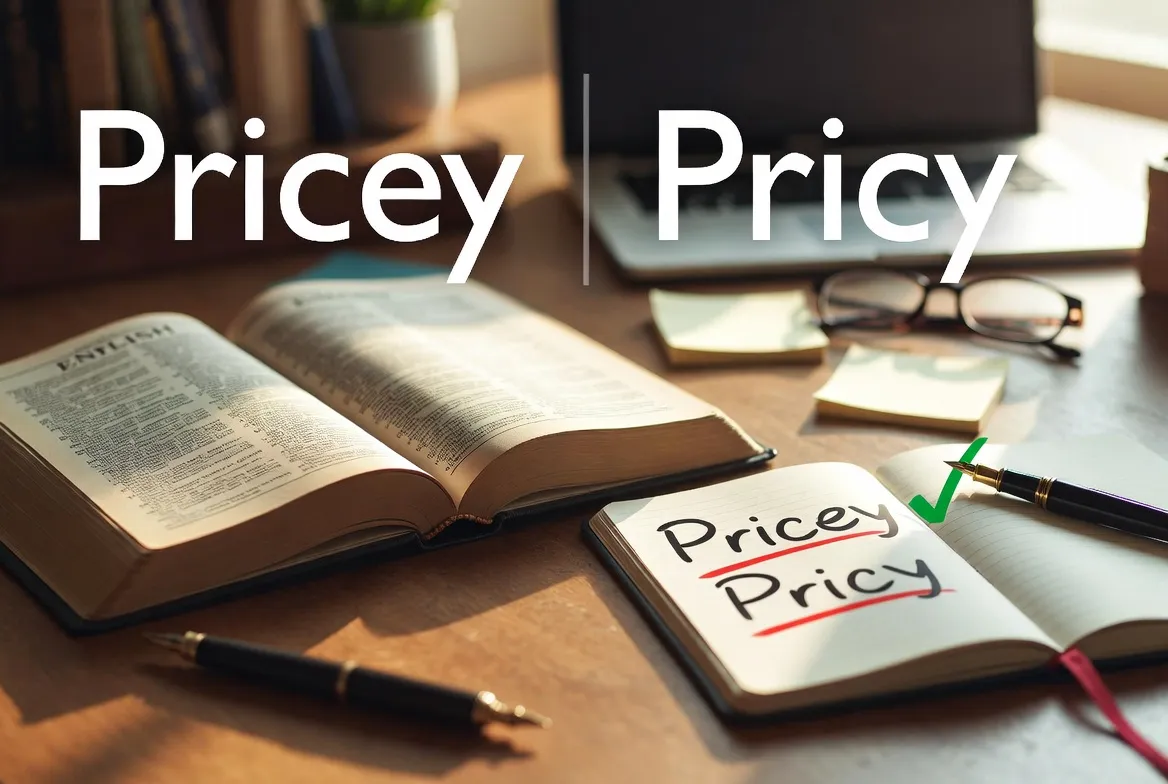
Pricey means expensive or costing a lot of money. It is an informal word often used when something feels more costly than expected.
Have you ever written a sentence and stopped to wonder, “Is it pricey or pricy?” You are not alone. Many English learners and writers get confused by these two spellings because both versions look correct at first glance.
I remember helping a student edit a short article about luxury products. The student used “pricy” several times and asked if it was a spelling mistake. The answer was surprising: it was not completely wrong, but pricey is the spelling most readers expect today.
Words like these create confusion because English often changes over time. Some words have more than one accepted spelling, while one version becomes more common in everyday writing.
In this guide, you will learn the meaning of pricey or pricy, discover the difference between the two spellings, understand where they come from, and see which form works best in modern English. By the end, you will know exactly which spelling to choose with confidence.
Pricey or Pricy – Quick Answer
Both pricey and pricy mean expensive, costly, or having a high price.
However, pricey is the more common and widely accepted spelling in modern English.
Examples:
- The restaurant was good, but the menu was a little pricey.
- That designer handbag looks beautiful, but it is too pricey for my budget.
The spelling pricy is also found in dictionaries, but it is much less common. Many writers prefer pricey because it clearly connects with the word price.
The Origin and Background of Pricey
The word pricey comes from the noun price, which refers to the amount of money needed to buy something.
English speakers began using pricey as an informal adjective to describe things that had a high cost. The ending -y is often added to nouns to create adjectives.
Examples:
- cloud → cloudy
- dirt → dirty
- taste → tasty
- price → pricey
The spelling developed naturally because adding -y to “price” creates the form pricey, which keeps the connection to the original word clear.
Over time, some writers shortened the spelling to pricy by removing the extra “e.” This happens in English sometimes when people try to make spelling simpler.
Similar spelling changes appear in other words:
- fancy → fancy (not fancey)
- icy → icy (not icey)
Although pricy follows a possible spelling pattern, pricey remains the dominant form in everyday English.
Pricey Explained : Key Differences Between Pricey and Pricy
The main difference between pricey and pricy is not meaning. Both words describe something expensive.
The difference is mainly about usage and popularity.
| Term | Meaning | When to Use | Region/Context |
| Pricey | Expensive or costly | Best choice for most writing and conversations | Common in American and British English |
| Pricy | Expensive or costly | Acceptable but less common | Occasionally used in informal writing |
Pricey
Pricey is the standard spelling used by most speakers and writers.
Examples:
- The hotel was pricey, but the service was excellent.
- Buying a new laptop can be pricey.
It works well in:
- Conversations
- Blogs
- Articles
- Reviews
- Everyday writing
Pricy
Pricy has the same meaning, but it appears less often.
Examples:
- The vacation package was quite pricy.
- That apartment seems too pricy for a student.
Although readers will understand it, some people may consider it unusual because they expect the spelling pricey.
Which Version Should You Use?
Choosing between pricey or pricy depends on your audience and writing purpose.
For students and beginners
Use pricey.
It is easier to recognize, more common, and less likely to confuse readers.
For professional writers
Use pricey in most situations.
Whether you are writing:
- A blog post
- A product review
- A report
- A marketing article
the common spelling creates a smoother reading experience.
For global English users
Choose pricey.
Because English is used worldwide, selecting the most familiar spelling helps more readers understand your message quickly.
A simple rule:
When in doubt, write “pricey.”
It is the safest and most natural choice.
Common Mistakes with Pricey or Pricy
Many writers make small spelling mistakes when using pricey or pricy. The confusion happens because both forms appear in English, but one is much more common.
Here are the mistakes you should avoid:
| Common Mistake | Correct Usage | Why It Happens |
| Using pricy in formal writing without checking | Use pricey in most cases | Writers may think shorter spelling is always better |
| Believing pricy and pricey have different meanings | Both mean expensive | The different spelling creates false confusion |
| Avoiding pricey because it looks informal | Pricey is widely accepted | Some people confuse informal words with incorrect words |
| Writing pricey when describing low-cost items | Use words like cheap, affordable, or budget-friendly | The meaning does not match the situation |
A helpful memory trick is simple:
Price + y = pricey.
The word keeps its connection to the original word price, making the spelling easier to remember.
Pricey in Real-World Examples
The word pricey appears often in daily conversations, reviews, articles, and casual writing. It usually describes something that costs more than expected.
1. Professional Email Example
Incorrect:
The software package is too pricy for our small company.
Better:
The software package is too pricey for our small company, so we are reviewing other options.
In professional communication, pricey sounds natural while keeping a friendly tone.
2. News Headline or Article Example
New Technology Products Are Becoming Pricey for Average Consumers
News writers often use pricey because it quickly communicates the idea of rising costs.
3. Social Media Post Example
“The coffee shop has amazing drinks, but the prices are a little pricey.”
On social media, pricey feels conversational and easy to understand.
4. Formal Document or Report Example
While pricey is acceptable, formal reports may use alternatives such as:
- Expensive
- High-cost
- Costly
- Overpriced
Example:
“The project requires expensive equipment and additional resources.”
A business report may prefer expensive because it sounds more formal.
Pricey or Pricy : Data, Trends, and Usage
When people search for pricey or pricy, they are usually looking for spelling confirmation. The search intent is mainly informational.
Readers want answers to questions like:
- Is “pricy” a spelling mistake?
- Which spelling should I use?
- Are both words correct?
Current English usage shows that pricey is far more common than pricy. Most dictionaries list both forms, but everyday writing strongly favors pricey.
The reason is simple: people naturally connect the word with price. The spelling looks familiar and immediately shows the meaning.
This matters today because online writing, blogs, product reviews, and social media depend on clear communication. Choosing the spelling most readers expect helps your content feel natural and professional.
Pricey or Pricy: Comparison Table
| Term/Variant | Meaning | Region/Context | Best Used When |
| Pricey | Something expensive or costly | Common in American and British English | Everyday writing, articles, reviews, conversations |
| Pricy | Something expensive or costly | Less common variant | Informal use when the audience accepts it |
Frequently Asked Questions About Pricey or Pricy
Q: What does pricey mean?
A: Pricey means expensive or costing a large amount of money. It is often used when something feels more expensive than expected.
Q: Is pricey or pricy the correct spelling?
A: Both spellings are recognized, but pricey is the more common and preferred spelling. Most writers should choose pricey.
Q: How do you use pricey correctly in a sentence?
A: Use pricey as an adjective to describe something expensive. For example: “That restaurant is a little pricey.”
Q: Is pricy wrong in English?
A: No, pricy is not completely wrong. However, it is uncommon, and many readers expect the spelling pricey.
Q: Can I use pricey in formal writing?
A: Yes, but it depends on the style. In reports or academic writing, words like expensive or costly may sound more formal.
Q: Where does the word pricey come from?
A: Pricey comes from the word price with the adjective ending -y. It developed as a way to describe something with a high cost.
Q: Can pricey describe anything besides products?
A: Yes. You can describe services, experiences, decisions, repairs, trips, and other things that cost a lot of money as pricey.
Conclusion
Understanding pricey or pricy is easier when you remember one simple rule: both words have the same meaning, but pricey is the spelling most people use today.
The word pricey describes something expensive, costly, or higher in price than expected. It works naturally in conversations, reviews, online content, and everyday writing. While pricy appears in some dictionaries, it is much less common and may look unusual to many readers.
If you are writing for students, customers, online audiences, or a global audience, pricey is the safest choice. It is clear, familiar, and widely accepted.
English has many words with spelling variations, and this is a perfect example. Knowing the difference helps you write with more confidence and avoid unnecessary confusion.
Now you know exactly how to use pricey or pricy : bookmark this guide so you never second-guess this spelling again.
Practise or Practice: Complete Guide to Correct Usage

Taha Husnain is an English researcher specializing in literature, language studies, and critical analysis. Their work focuses on advancing scholarly understanding through research and academic writing, with contributions to contemporary discussions in English studies.