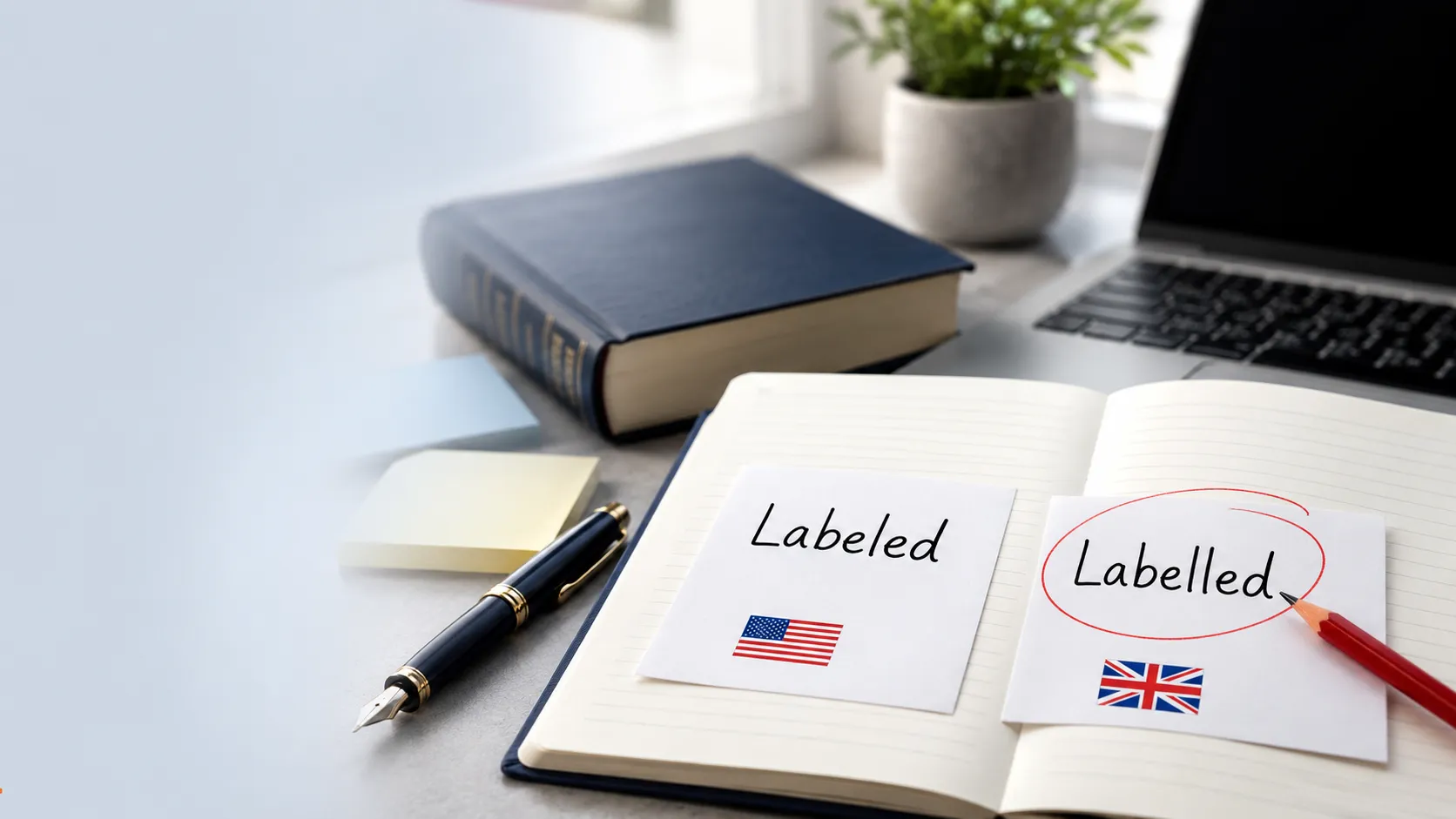
Labeled and labelled mean the same thing. Labeled is the preferred spelling in American English, while labelled is the standard spelling in British English. Choose the version that matches your audience and stay consistent.
Labeled or Labelled: Which Spelling Is Correct?
I still remember proofreading one of my first articles before publishing it online. I had carefully checked every sentence, but one tiny word kept catching my eye: labeled or labelled. I changed it several times because I wasn’t sure which spelling was actually correct.
If you’ve had the same question, you’re not alone. Many students, writers, bloggers, and professionals wonder whether they should use labeled or labelled. Since both spellings appear in books, websites, and official documents, it’s easy to think one of them must be wrong.
The good news is that both spellings are correct. The only real difference is the type of English you’re writing. American English prefers labeled, while British English prefers labelled.
By the end of this guide, you’ll know exactly when to use each spelling, why the difference exists, and how to avoid common mistakes with confidence.
Labeled or Labelled – Quick Answer
The words labeled and labelled are both the past tense and past participle of the verb label, which means to attach a tag, identify something, or describe someone or something.
The only difference is spelling.
- Labeled → American English
- Labelled → British English, Canadian English, Australian English, and many other Commonwealth countries
Examples
American English
- The teacher labeled every folder before class.
- Each product was labeled with a barcode.
British English
- Every suitcase was labelled clearly.
- The museum labelled each painting with its artist’s name.
The meaning never changes. Only the regional spelling does.
The Origin and Background of Labeled or Labelled
The word label comes from the Old French word label, which referred to a small strip or tag attached to something. Over time, English speakers began using the word as both a noun and a verb.
When English spelling developed differently in Britain and America, many words ending in -el followed different rules.
In British English, a final l is usually doubled before adding -ed or -ing when the stress pattern allows it.
Examples include:
- travel → travelled
- cancel → cancelled
- fuel → fuelled
- label → labelled
American English simplified many of these spellings by keeping a single l.
Examples include:
- traveled
- canceled
- fueled
- labeled
This spelling difference has existed for well over a century and is accepted by dictionaries around the world.
Labeled or Labelled Explained : Key Differences
Although the spellings look different, they have exactly the same meaning.
| Term | Meaning | When to Use | Region/Context |
| Labeled | Past tense of label | American writing | United States |
| Labelled | Past tense of label | British writing | UK, Australia, Canada, New Zealand, and many Commonwealth countries |
Meaning
Both words can mean:
- Attached a tag
- Identified something
- Classified a person or object
- Described someone in a particular way
Example 1 – Physical Label
- The boxes were labeled before shipping. 🇺🇸
- The boxes were labelled before shipping. 🇬🇧
Example 2 – Identifying Someone
- She was labeled a talented musician.
- She was labelled a talented musician.
Both sentences are correct. The spelling simply matches a different variety of English.
Which Version Should You Use?
Choosing between labeled and labelled is easier than many people think. The answer depends on who will read your writing.
If you’re writing for an American audience
Use labeled.
This is the spelling expected in:
- American schools
- U.S. universities
- American businesses
- Most U.S. newspapers
- American websites
Example
Every package was labeled before delivery.
If you’re writing for a British audience
Use labelled.
This spelling is standard in:
- United Kingdom
- Australia
- New Zealand
- Many Canadian publications
- International organizations using British English
Example
Every package was labelled before delivery.
If you’re writing for a global audience
Either spelling is correct.
The most important rule is consistency.
Don’t switch between labeled and labelled in the same article, report, or website unless you’re discussing the spelling difference itself.
A consistent style looks more professional and helps readers trust your writing.
Common Mistakes with Labeled or Labelled
Many mistakes happen because writers mix British and American spelling rules.
Here are the most common ones.
| Mistake | Correct |
| The products were labelled for an American newspaper. | The products were labeled for an American newspaper. |
| The museum labeled every exhibit in a UK publication. | The museum labelled every exhibit in a UK publication. |
| Switching between labeled and labelled in one article. | Pick one spelling and use it consistently. |
| Thinking one spelling is incorrect. | Both spellings are correct in the right variety of English. |
| Using different spelling styles without checking your audience. | Match the spelling to your readers. |
Why These Mistakes Happen
Most people learn English from different sources. One website may use American English, while another follows British English. Mixing these styles is common, especially for international writers.
The easiest solution is to decide which English style you’re using before you start writing.
That simple habit will keep your work clear, consistent, and professional
Labeled or Labelled in Real-World Examples
Seeing a word in context is one of the easiest ways to remember it. Here are examples of labeled and labelled in different types of writing.
Professional Email
American English
Please make sure every shipment is labeled before it leaves the warehouse.
British English
Please ensure every shipment is labelled before it leaves the warehouse.
News Headline
American English
Hundreds of Food Products Labeled Incorrectly During Inspection
British English
Hundreds of Food Products Labelled Incorrectly During Inspection
Social Media Post
American English
I finally got my storage boxes labeled. Finding things is so much easier now!
British English
I finally got my storage boxes labelled. Everything looks much more organised now!
Formal Report
American English
Every sample was labeled according to laboratory procedures.
British English
Every sample was labelled according to laboratory procedures.
Labeled or Labelled : Data, Trends & Usage
Both spellings are widely used, but their popularity depends on the region.
Search Intent
- Primary Intent: Informational
- Audience: Students, teachers, writers, editors, bloggers, and English learners
- Goal: Learn which spelling is correct and when to use it
Regional Usage
- United States: Labeled is overwhelmingly preferred.
- United Kingdom: Labelled is the standard spelling.
- Australia: Labelled is more common.
- New Zealand: Labelled is preferred.
- Canada: Both appear, but labelled is generally more common in Canadian English.
Why People Search for This Topic
People often notice both spellings while reading books, websites, or product packaging. They want to know whether one spelling is wrong or whether both are acceptable.
The answer matters because using the right spelling helps your writing look polished and appropriate for your audience.
Standalone Comparison Table
| Term/Variant | Meaning | Region/Context | Best Used When |
| Labeled | Past tense of label | American English | Writing for U.S. readers, schools, businesses, and publications |
| Labelled | Past tense of label | British English | Writing for UK, Australia, New Zealand, and many Commonwealth audiences |
Frequently Asked Questions
Q: What does labeled or labelled mean?
A: Both words mean the same thing. They describe something that has been tagged, identified, classified, or given a name.
Q: Which spelling is correct: labeled or labelled?
A: Both are correct. Labeled follows American English spelling, while labelled follows British English spelling.
Q: How do I use labeled or labelled correctly?
A: Match the spelling to your audience. If you’re writing for American readers, use labeled. If you’re writing for British or Australian readers, use labelled.
Q: Is labelled acceptable in formal writing?
A: Yes. Labelled is perfectly acceptable in formal writing that follows British English conventions, including academic papers, reports, and government documents.
Q: Why does British English use labelled with two Ls?
A: British English often doubles the final l before adding -ed or -ing to certain verbs. This spelling rule also appears in words like travelled, cancelled, and fuelled.
Q: Is labeled wrong in the United Kingdom?
A: It is not technically wrong, but it looks unusual in British writing. Most UK publishers and schools prefer labelled.
Q: Can I use both spellings in the same document?
A: It’s best not to. Choose one spelling style and use it consistently throughout your document for a professional appearance.
Conclusion
Choosing between labeled and labelled is much simpler than it first appears. Both spellings are correct, both have the same meaning, and both are accepted by major dictionaries. The only real difference is the variety of English you’re using.
If your audience is in the United States, use labeled. If you’re writing for readers in the United Kingdom, Australia, or many other Commonwealth countries, use labelled. For international writing, consistency matters more than the specific spelling you choose.
Remember these key points:
- Labeled = American English.
- Labelled = British English.
- The meaning never changes.
- Stay consistent throughout your writing.
Now you know exactly how to use labeled or labelled with confidence. Bookmark this guide so you never second-guess the spelling again, and share it with someone who finds English spelling confusing.
Themself or Themselves: The Complete Usage Guide

Ifrah Maqsood is an English author passionate about creating articles that inspire and engage users.
Their work explores imagination, emotion, and the human experience across diverse themes.
Through their writing, they aim to leave a lasting impact on audiences around the world.