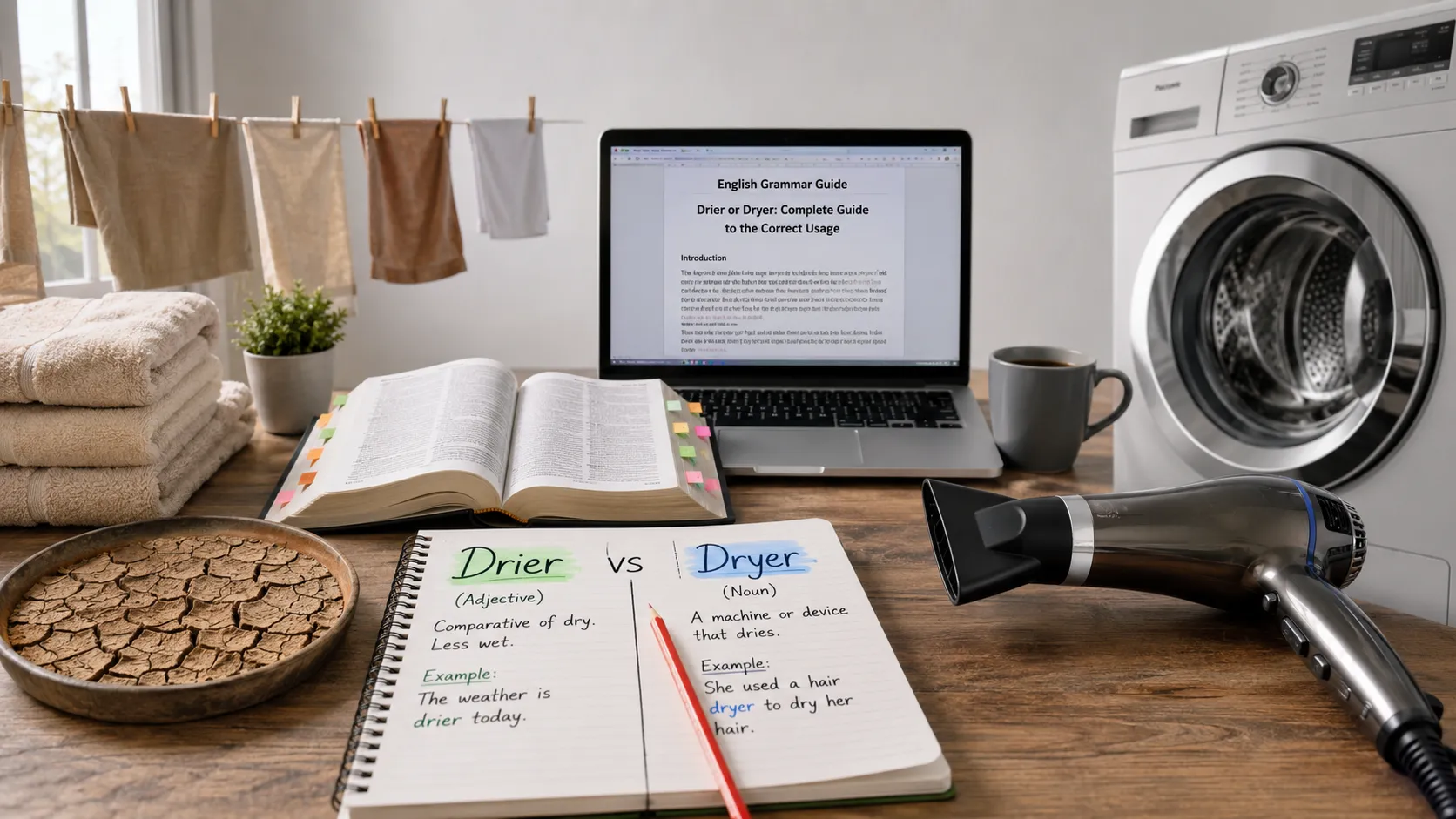
Drier means more dry, while dryer usually means a machine or device that makes something dry. Use drier for comparison and dryer for an object or appliance.
Have you ever written a sentence and stopped because you were unsure whether to use drier or dryer? You are not alone. Even experienced writers sometimes pause when these two words appear because they look almost identical and sound nearly the same.
I remember helping a student correct a sentence that said, “The clothes are getting dryer after sitting in the sun.” The student was surprised when I explained that drier was the correct word because the sentence was comparing the condition of the clothes, not talking about a machine.
This small spelling difference can change the meaning of a sentence completely. Many people search for drier or dryer because they want to know which spelling is correct, especially in writing, grammar tests, emails, and everyday conversations.
In this guide, you will learn the simple difference between these words, their history, correct usage, common mistakes, and real examples. By the end, you will never have to guess again.
Drier or Dryer – Quick Answer
The difference between drier and dryer is simple:
- Drier = the comparative form of dry, meaning more dry than something else.
- Dryer = a person, machine, or device that makes something dry.
Examples:
- The desert air is drier than the coastal air.
- I bought a new clothes dryer for my home.
A quick memory trick:
Drier = describes dryness.
Dryer = does the drying.
If you are comparing two levels of dryness, choose drier. If you mean a machine or tool, choose dryer.
The Origin and Background of Drier and Dryer
Both words come from the Old English word dryge, which meant “not wet” or “free from moisture.” Over centuries, English developed different forms to describe changes in dryness and tools used for drying.
The word dry became a common adjective:
- The towel is dry.
- The ground is dry.
When English speakers wanted to compare two things, they added -er to create:
- dry → drier
This follows a common English grammar rule:
- happy → happier
- easy → easier
- busy → busier
However, English also uses -er to describe a person or thing that performs an action:
- teach → teacher
- mix → mixer
- dry → dryer
This created two words with the same spelling pattern but different meanings.
The confusion happens because both words look correct. The extra letter y changing to i in drier follows grammar rules, while dryer follows the noun-forming pattern.
Drier or Dryer Explained : Key Differences
Although they look almost identical, drier and dryer have different jobs in a sentence.
Drier: Meaning and Usage
Drier is an adjective used to compare dryness.
It means:
“More dry than before or more dry than something else.”
Examples:
- Today’s weather is drier than yesterday’s.
- My skin feels drier during winter.
- This towel is drier than the one on the floor.
Here, drier describes a condition.
It answers the question:
“How dry is it compared to something else?
Dryer: Meaning and Usage
Dryer is usually a noun.
It refers to something that removes moisture.
Common examples:
- clothes dryer
- hair dryer
- hand dryer
- food dryer
Examples:
- The dryer finished the laundry cycle.
- She used a hair dryer after washing her hair.
- The bathroom hand dryer is broken.
Here, dryer is not describing dryness. It is naming a device.
It answers the question:
“What removes water or moisture?”
Drier vs Dryer Comparison Table
| Term | Meaning | When to Use | Region/Context |
| Drier | More dry; comparative form of dry | When comparing dryness | General English usage |
| Dryer | A machine, tool, or person that dries something | When referring to a drying device | Home, workplace, technology |
Which Version Should You Use?
Choosing between drier and dryer depends on what you want to say.
For Students and English Learners
Use drier when you are describing a change or comparison.
Examples:
- The weather became drier after summer started.
- My clothes are drier now.
Use dryer when you are naming equipment.
Examples:
- The washing machine and dryer are in the laundry room.
- I need a new hair dryer.
For Professional Writers
Accuracy matters because a small spelling mistake can confuse readers.
In reports, articles, and emails:
- Use drier for conditions, climates, materials, and comparisons.
- Use dryer for products, machines, and tools.
Example:
Incorrect:
The new weather system makes the area dryer than before.
Correct:
The new weather system makes the area drier than before.
The second sentence explains a change in dryness, not a machine.
For Global English Users
The spelling difference is understood in both American and British English.
There is no major regional difference:
- American English: drier / dryer
- British English: drier / dryer
Both forms are accepted worldwide.
The key is not location. The key is meaning.
Common Mistakes with Drier and Dryer
Many mistakes happen because these words sound similar. Here are the most common errors.
1. Using “Dryer” for Comparison
❌ Incorrect:
The air is dryer today than yesterday.
✅ Correct:
The air is drier today than yesterday.
Why?
The sentence compares two conditions, so drier is needed.
2. Using “Drier” for a Machine
❌ Incorrect:
I bought a new clothes drier.
✅ Correct:
I bought a new clothes dryer.
Why?
A clothes dryer is a device that removes moisture.
3. Confusing Hair Dryer and Hair Drier
❌ Incorrect:
She used a hair drier after washing her hair.
✅ Correct:
She used a hair dryer after washing her hair.
Why?
The tool is called a hair dryer.
4. Forgetting the Comparative Rule
Some writers think “dryer” means “more dry” because English often adds -er.
However, when dry becomes comparative:
dry + er → drier
The spelling changes because the y becomes i.
5. Using Both Words Interchangeably
❌ Incorrect idea:
Drier and dryer mean the same thing.
✅ Correct:
They have different meanings.
- Drier describes dryness.
- Dryer describes something that creates dryness.
Drier or Dryer in Real-World Examples
Understanding grammar rules is easier when you see how people use these words in everyday situations. The difference between drier and dryer becomes clear when you place them in real conversations and writing.
1. Professional Email Example
Incorrect:
The office air feels dryer this week because the weather has changed.
Correct:
The office air feels drier this week because the weather has changed.
Why?
The sentence talks about the condition of the air. It does not mention a machine. Therefore, drier is the correct choice.
2. News Headline Example
Scientists Report Drier Conditions Across the Region
Here, drier describes weather conditions.
News writers often use drier, warmer, colder, or wetter when reporting climate changes.
Example:
The western areas are expected to experience drier weather this season.
3. Social Media Post Example
My skin gets drier during winter, so I always keep moisturizer nearby.
This is a personal comparison. The writer is explaining a change in skin condition.
Another example:
Finally bought a new clothes dryer! Laundry days will be much easier now.
Here, dryer refers to an appliance.
4. Formal Report Example
The research shows that the soil became drier after several weeks without rainfall.
The word drier explains a change in moisture level.
Another example:
The company installed an energy-efficient dryer to improve production speed.
Here, dryer is a machine.
Drier or Dryer : Data, Trends & Usage
The search interest around drier or dryer mainly comes from people trying to solve a spelling and grammar confusion.
The search intent is:
Informational : users want to know which word is correct and how to use it.
People commonly search this phrase because:
- Both words look almost identical.
- They sound similar when spoken.
- English spelling rules are sometimes confusing.
- Many learners are unsure when “y” changes to “i.”
The topic is especially useful for:
- English learners
- Students preparing for exams
- Writers and bloggers
- Professionals who want accurate communication
A useful insight is that small spelling differences often create big meaning changes. Learning words like drier and dryer helps writers build stronger vocabulary and avoid common mistakes.
Standalone Comparison Table: Drier vs Dryer
| Term/Variant | Meaning | Region/Context | Best Used When |
| Drier | More dry; having less moisture compared to something else | Used in everyday English worldwide | Comparing weather, objects, skin, soil, or conditions |
| Dryer | A machine, tool, or person that removes moisture | Used in homes, workplaces, and technology | Talking about appliances or drying equipment |
Frequently Asked Questions About Drier or Dryer
Q: What does drier mean?
A: Drier means “more dry.” It is the comparative form of the adjective dry. You use it when comparing the amount of moisture in two things.
Example:
This climate is drier than the one near the ocean.
Q: What does dryer mean?
A: Dryer usually means a machine or device that removes moisture. Common examples include a clothes dryer, hair dryer, and hand dryer.
Example:
The clothes dryer stopped working yesterday.
Q: How do you use drier correctly?
A: Use drier when you describe something becoming less wet or having less moisture than something else.
Examples:
- The towel is drier now.
- The desert has a drier climate than the forest.
Q: Drier vs dryer : what is the difference?
A: The main difference is meaning.
- Drier = more dry (comparison)
- Dryer = something that dries (machine or tool)
Remember:
Drier describes dryness. Dryer does the drying.
Q: Is dryer acceptable in formal writing?
A: Yes, dryer is completely acceptable in formal writing when you mean a drying device or machine.
Example:
The laboratory purchased a new industrial dryer.
However, do not use dryer when you mean “more dry.”
Q: Which spelling is correct : drier or dryer?
A: Both spellings are correct, but they are used differently.
Use:
- Drier for comparisons.
- Dryer for machines and tools.
Neither word replaces the other.
Q: Where do drier and dryer come from?
A: Both words come from the Old English word related to dryness. Over time, English developed drier as the comparative form of dry and dryer as a noun for something that dries.
Q: Can drier be used for weather and climate?
A: Yes. Drier is commonly used when discussing weather and climate.
Examples:
- The region is becoming drier every year.
- Farmers are preparing for drier conditions.
Conclusion: Drier or Dryer : Which One Should You Remember?
The difference between drier and dryer is simple once you understand their roles.
Drier describes a change in moisture. It means something is more dry than before or compared to something else. You will see it in conversations about weather, skin, soil, clothes, and climate.
Dryer names something that creates dryness. It usually refers to appliances like a clothes dryer, hair dryer, or hand dryer.
The easiest memory trick is:
Drier = describes dryness.
Dryer = does the drying.
Both words are correct, but they cannot always replace each other. Choosing the right one makes your writing clearer and more professional.
Language becomes easier when you understand the small details. Keep practicing these confusing word pairs, and you will become more confident every time you write.
Now you know exactly how to use drier and dryer : bookmark this guide so you never second-guess these words again.
Weather or Whether: The Complete Easy Guide

Ifrah Maqsood is an English author passionate about creating articles that inspire and engage users.
Their work explores imagination, emotion, and the human experience across diverse themes.
Through their writing, they aim to leave a lasting impact on audiences around the world.