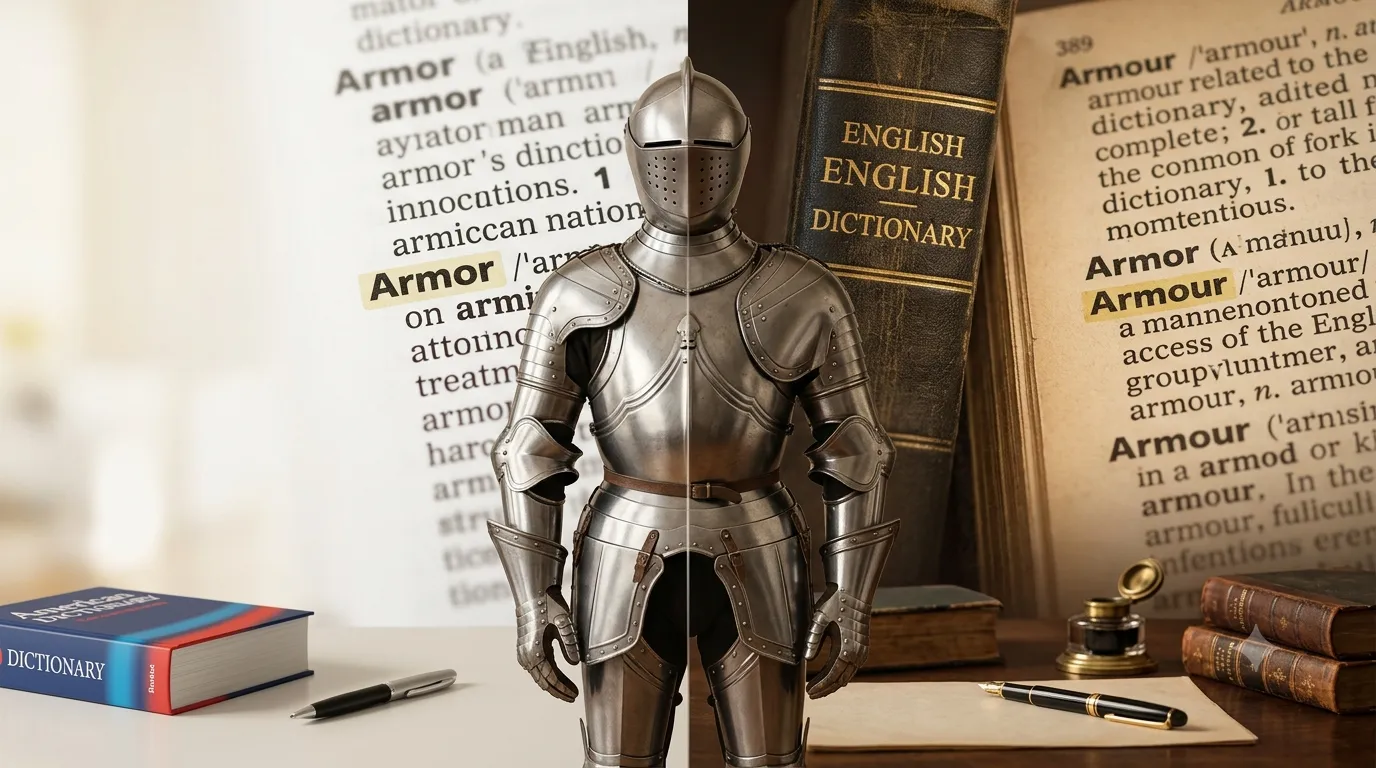
Armor and armour are both correct; armor is the American English spelling, while armour is the British English spelling.
Have you ever seen the word written as armor in one place and armour somewhere else? If yes, you are not alone. Many English learners, writers, and students wonder which spelling is correct. The good news is that armor or armour is not a question of right versus wrong. Both spellings are correct, but they are used in different parts of the world.
People often search for this topic because they want to write correctly in emails, school assignments, blogs, or professional documents. Using the wrong spelling for your audience can make your writing look less consistent, even though the meaning stays the same.
Understanding the difference is simple. The only real change is the spelling based on the type of English you use. Once you know when to use each version, you can write with confidence.
This guide explains the meaning, history, spelling differences, examples, common mistakes, and practical tips so you can easily decide whether to use armor or armour.
Armor or Armour – Quick Answer
Both armor and armour mean protective clothing or equipment worn to defend a person or vehicle from injury or attack.
- Armor is the American English spelling.
- Armour is the British English spelling.
Both words have exactly the same meaning.
Real-Life Examples
- The knight wore heavy armor before the battle. (American English)
- The museum displayed medieval armour. (British English)
- Modern military armor/armour protects soldiers from danger.
The Origin of Armor or Armour
The word comes from the Latin arma, meaning “weapons” or “equipment.” It later entered Old French as armure, then became armour in Middle English.
When American English spelling became more standardized, many words ending in -our were simplified to -or. This change affected words like:
- colour → color
- honour → honor
- favour → favor
- armour → armor
The spelling changed, but the pronunciation and meaning stayed the same.
British English vs American English Spelling
The main difference is the variety of English being used.
| Version | Spelling | Region | Example Sentence |
| American English | Armor | United States | The tank has thick armor. |
| British English | Armour | United Kingdom | The soldier repaired his armour. |
| Canadian English | Armour (more common) | Canada | The museum displayed ancient armour. |
| Australian English | Armour | Australia | Knights wore heavy armour in battle. |
Simple Rule
- Writing for Americans? Use armor.
- Writing for British readers? Use armour.
Which Spelling Should You Use?
Choosing the correct spelling depends on your audience.
For a US Audience
Use armor.
Examples include:
- American websites
- US schools
- US businesses
- American newspapers
For a UK or Commonwealth Audience
Use armour.
This spelling is preferred in:
- United Kingdom
- Australia
- New Zealand
- Many Commonwealth countries
For Global or SEO Writing
Think about your readers.
- Targeting mostly American visitors? Choose armor.
- Targeting British readers? Choose armour.
- If your audience is worldwide, stay consistent and use only one spelling throughout the article.
Common Mistakes with Armor or Armour
Many learners make small mistakes when using these spellings.
| Incorrect | Correct |
| Using armor in British writing | Use armour |
| Mixing armor and armour in one article | Choose one spelling and stay consistent |
| Thinking one spelling is wrong | Both spellings are correct |
| Changing spelling randomly | Match your audience |
Wrong
- The knight wore armor, and his armour was heavy.
Better
- The knight wore armor. (US English)
- The knight wore armour. (UK English)
Armor or Armour in Everyday Examples
Emails
US
“Our company provides lightweight body armor.”
UK
“Our company supplies protective body armour.”
News Headlines
US
“New military armor improves soldier safety.”
UK
“New military armour improves soldier safety.”
Social Media
- This medieval armor looks amazing!
- I love the detail on this knight’s armour.
Formal Writing
“The vehicle’s reinforced armor reduced damage.”
“The vehicle’s reinforced armour reduced damage.
Armor or Armour – Google Trends & Usage
The popularity of these spellings depends mainly on location.
- Armor is searched more often in the United States.
- Armour is more common in the United Kingdom, Australia, and other Commonwealth countries.
- Both versions appear frequently in books, history articles, military writing, gaming, and fantasy content.
- Search engines usually recognize both spellings and understand they have the same meaning.
For SEO, choosing the spelling that matches your target audience is the best strategy.
Armor vs Armour Comparison Table
| Feature | Armor | Armour |
| Meaning | Protective equipment | Protective equipment |
| Correct Spelling | Yes | Yes |
| English Style | American | British |
| Pronunciation | Same | Same |
| Used in USA | Yes | Rare |
| Used in UK | Rare | Yes |
| SEO Choice | Best for US audience | Best for UK audience |
FAQs
Is armor or armour correct?
Yes. Both are correct. Armor is American English, while armour is British English.
Why do Americans spell it armor?
American English simplified many -our endings to -or, creating spellings like armor, color, and honor.
Is armour old-fashioned?
No. It is still the standard spelling in British English today.
Do armor and armour have different meanings?
No. They both refer to protective clothing or equipment.
Which spelling should I use for SEO?
Use the spelling your audience searches for most. American websites usually prefer armor, while British websites often use armour.
Can I use both spellings in one article?
It is better to choose one spelling and use it consistently throughout your writing.
Which spelling is used in school?
It depends on your country’s English standard. American schools teach armor, while British schools teach armour.
Conclusion
Choosing between armor or armour is much easier once you know the difference. Both words mean the same thing and are equally correct. The only difference is the type of English you are writing. If your audience is in the United States, use armor. If you are writing for readers in the United Kingdom or other Commonwealth countries, use armour.
The most important rule is consistency. Mixing both spellings in the same document can make your writing look unprofessional, even though neither spelling is wrong. Think about who will read your content before you decide which version to use.
Whether you are writing a school assignment, a blog post, a business email, or a website article, selecting the correct spelling for your audience helps your message look polished and trustworthy. Now that you understand the history, spelling rules, and everyday usage, you can confidently choose between armor and armour every time.
Octopi or Octopuses: The Complete Guide

Ifrah Maqsood is an English author passionate about creating articles that inspire and engage users.
Their work explores imagination, emotion, and the human experience across diverse themes.
Through their writing, they aim to leave a lasting impact on audiences around the world.