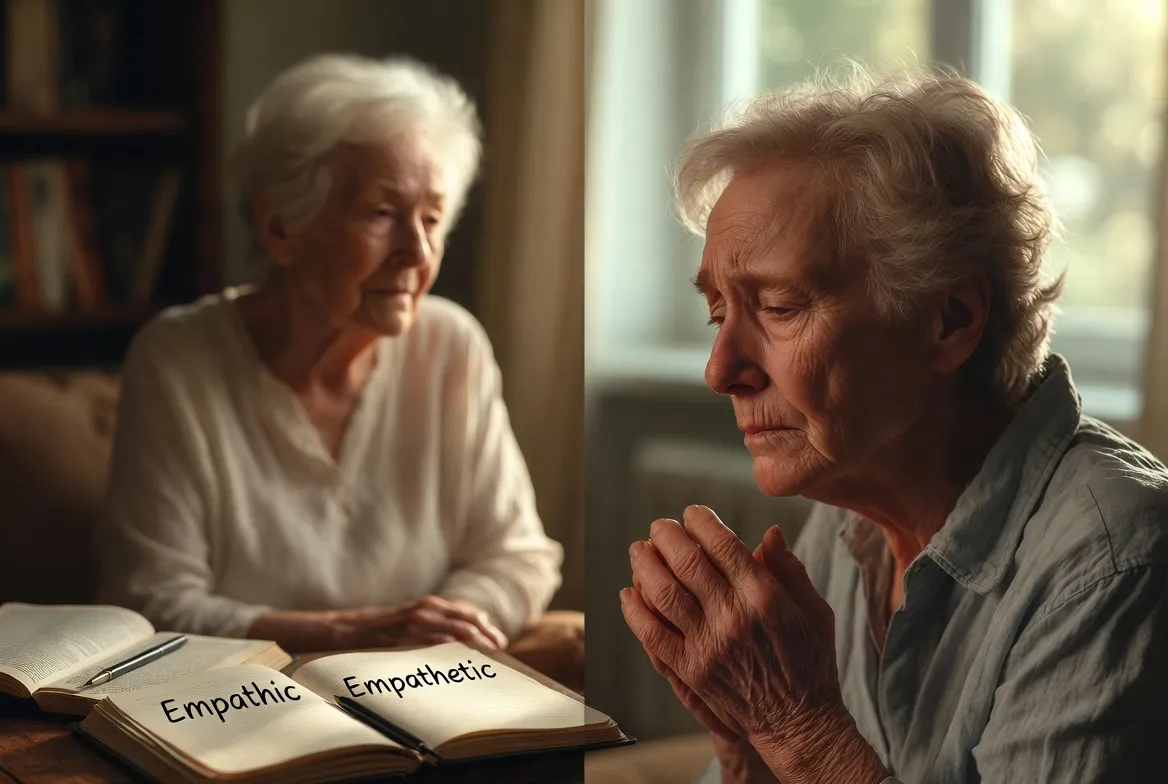
Both empathic and empathetic are correct, but empathetic is more common in everyday English, while empathic is used more often in psychology and academic writing.
Have you ever wondered whether empathic or empathetic is the correct word? You’re not alone. Many English learners, writers, and even native speakers search for this question because both words appear in books, articles, and everyday conversations.
The good news is that empathic or empathetic is not a case of correct versus incorrect spelling. Both words are real English adjectives that describe someone who can understand and share another person’s feelings. However, they are used differently depending on style, region, and personal preference.
Knowing which word to choose can make your writing sound more natural and professional. Whether you’re writing an email, a school assignment, a blog post, or a social media caption, understanding these two words will help you communicate clearly. In this guide, you’ll learn the meaning, history, spelling differences, common mistakes, and practical examples so you can confidently decide which form works best for your audience.
The Origin of Empathic or Empathetic
The words empathic and empathetic both come from the noun empathy, which entered English in the early 1900s. The word empathy comes from the Greek word empatheia, meaning “passion” or “strong feeling.”
As English developed, two adjective forms appeared:
- Empathic follows the common adjective ending -ic.
- Empathetic uses the ending -etic, making it sound closer to the noun empathy.
Over time, both forms became accepted. Today, dictionaries recognize both words as correct, although empathetic is more common in everyday English.
British English vs American English Spelling
Unlike many English words, empathic and empathetic are not a British-versus-American spelling difference. Both forms are used in the UK and the US.
| Version | Spelling | Region | Example Sentence |
| Standard adjective | Empathic | UK & US | The therapist was empathic throughout the conversation. |
| Standard adjective | Empathetic | UK & US | She gave an empathetic response to her friend. |
Key point: The choice depends more on writing style than on your country.
Which Spelling Should You Use?
For a US Audience
Choose empathetic because it is more common in newspapers, blogs, and everyday writing.
For a UK or Commonwealth Audience
Both forms are accepted, but empathetic is also more common in general use.
For a Global or SEO Audience
Use empathetic as your main choice because more readers recognize it. If you’re discussing language or psychology, mention empathic as an accepted alternative.
Common Mistakes with Empathic or Empathetic
Many learners make small mistakes when using these words.
| Incorrect | Correct |
| She is very empathy. | She is very empathetic. |
| He showed an empathy response. | He showed an empathic response. |
| Empathic is wrong. | Empathic is correct. |
| Only empathetic is accepted. | Both words are accepted. |
Common mistakes
- Thinking one word is incorrect.
- Mixing the adjective with the noun empathy.
- Assuming one spelling belongs only to British English.
- Using the wrong word form in a sentence.
Empathic or Empathetic in Everyday Examples
Emails
Thank you for your empathetic understanding during this difficult time.
News Headlines
The mayor gave an empathetic response to affected families.
Social Media
We all need to be more empathetic toward each other.
Formal Writing
The researcher examined empathic communication between healthcare professionals and patients.
Empathic or Empathetic – Google Trends & Usage
In general, empathetic is searched and used more often than empathic. It appears frequently in blogs, business writing, education, and everyday conversations.
Empathic remains popular in psychology, counseling, healthcare, and academic research, where writers often prefer the shorter form.
Across English-speaking countries, both words are understood. However, if your goal is to reach the widest audience, empathetic is usually the safer choice because it feels more familiar to most readers.
Comparison Table
| Feature | Empathic | Empathetic |
| Correct English word | ✅ | ✅ |
| Meaning | Showing empathy | Showing empathy |
| Everyday use | Less common | More common |
| Academic writing | Common | Also accepted |
| Formal writing | Yes | Yes |
| Informal writing | Yes | Yes |
| Best for general readers | Good | Excellent |
Frequently Asked Questions
Is empathic or empathetic correct?
Yes. Both words are correct and have the same basic meaning.
Is empathetic more common than empathic?
Yes. Empathetic is generally more common in everyday English.
Is empathic used in psychology?
Yes. Many psychology and counseling texts use empathic, although empathetic is also acceptable.
Is empathic British and empathetic American?
No. Both words are used in British and American English.
Can I use empathic and empathetic interchangeably?
In most situations, yes. They have the same meaning, though empathetic is more common.
Which word is better for SEO writing?
Empathetic usually reaches a broader audience because it is the more familiar form.
Conclusion
The question of empathic or empathetic is easier than it first appears. Unlike many spelling debates, this is not about right versus wrong. Both words are correct, accepted by major dictionaries, and mean someone who understands and shares another person’s feelings.
The main difference is usage. Empathetic is the preferred choice for everyday communication, online content, business writing, and articles aimed at general readers. Empathic is also correct and often appears in psychology, counseling, healthcare, and academic writing.
If you’re unsure which form to use, think about your audience. For most readers, empathetic is the safest and most familiar option. If you’re writing for a professional or academic audience, empathic may fit naturally. Either way, you can use both words with confidence, knowing they express the same important idea of understanding and caring for others.
Eaten or Ate: The Complete Guide to Using Them Right

Ifrah Maqsood is an English author passionate about creating articles that inspire and engage users.
Their work explores imagination, emotion, and the human experience across diverse themes.
Through their writing, they aim to leave a lasting impact on audiences around the world.